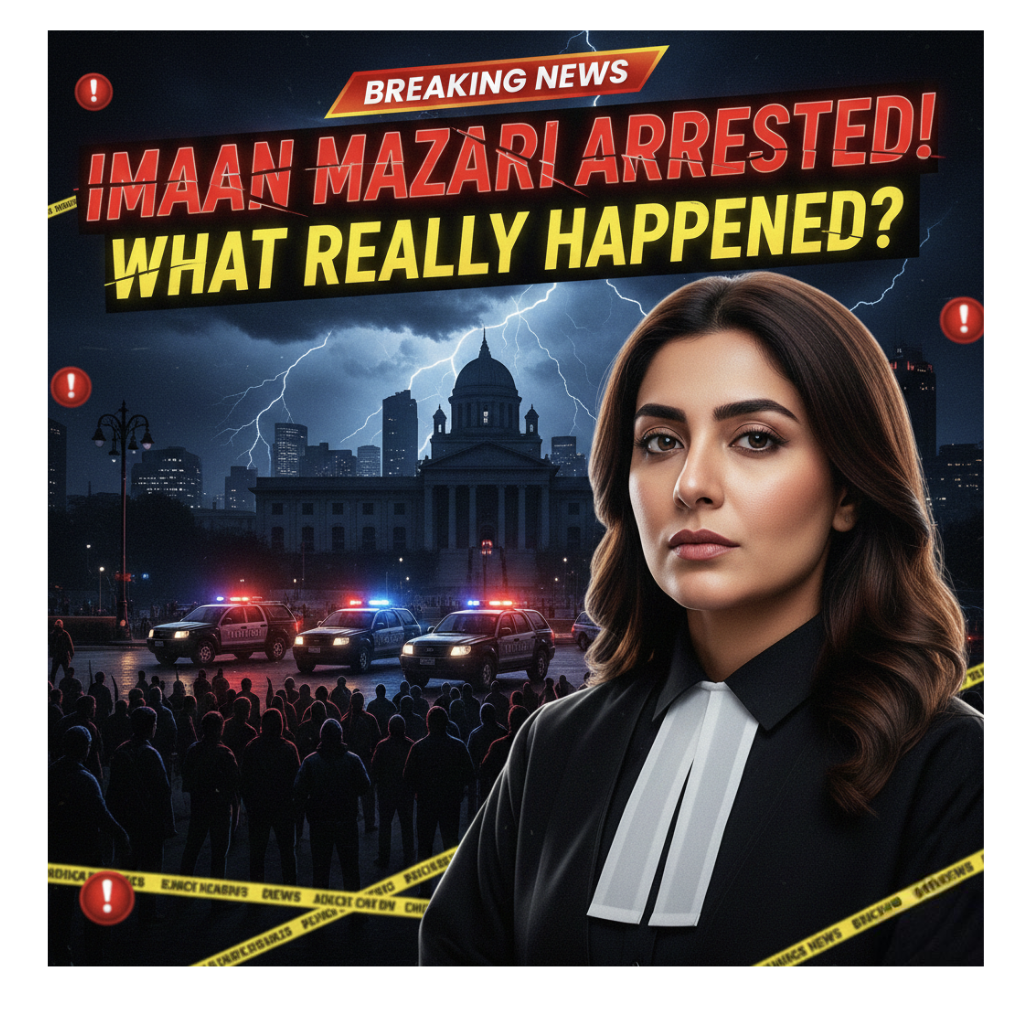
📰 Imaan Mazari Arrest: What Really Happened?
Inside Pakistan’s Most Controversial Human Rights Case
Introduction: A Arrest That Shook Pakistan
The arrest of Pakistani human rights lawyer Imaan Mazari in January 2026 triggered a political storm, legal protests, and international outrage. Supporters called it a crackdown on dissent, while authorities justified it as a lawful action under cybercrime and anti-terror laws.
The case quickly became more than just an arrest—it turned into a symbol of Pakistan’s ongoing struggle between freedom of expression and state authority.
But what actually happened?
Why was Imaan Mazari arrested?
What charges were filed against her?
And what does this case mean for Pakistan’s democracy and human rights?
This article explains the full story with verified facts, timeline, and analysis.
📰 Latest News on Imaan Mazari
Who Is Imaan Mazari?
Imaan Mazari is a prominent Pakistani lawyer and human rights activist. Known for her outspoken criticism of Pakistan’s military and state institutions, she has represented victims of enforced disappearances and human rights abuses.
She is also the daughter of Shireen Mazari, a former federal minister, which made her an even more visible figure in Pakistan’s political and legal landscape.
Over the years, Imaan Mazari has built a reputation as a bold critic of powerful institutions, often using social media to express her views on human rights violations and political issues.
Timeline of Events: What Really Happened?
1️⃣ Background: Social Media Posts and Legal Cases
The roots of the case go back to 2021–2025, when authorities accused Imaan Mazari of posting content critical of Pakistan’s military and state institutions on social media.
According to court documents, the charges included:
- Cyber terrorism
- Dissemination of false information
- Anti-state propaganda
- Criticism of security forces
Authorities claimed her posts aligned with narratives of hostile groups and portrayed the armed forces negatively.
A formal complaint was filed with Pakistan’s National Cyber Crime Investigation Agency (NCCIA), leading to legal proceedings and arrest warrants.
2️⃣ Cancellation of Bail and Arrest Warrants
In early January 2026, a court canceled her interim bail due to repeated non-appearances in hearings and issued fresh arrest warrants.
Soon after, Pakistani police arrested Imaan Mazari and her husband, advocate Hadi Ali Chattha, while they were reportedly heading to court in Islamabad.
This dramatic arrest triggered immediate backlash from lawyers and civil society groups.
3️⃣ Arrest Sparks Nationwide Protests
The arrest was widely condemned by legal bodies and human rights activists.
Bar associations announced strikes, calling the arrest unconstitutional and politically motivated.
Human rights groups argued that the authorities were targeting Mazari for her activism and criticism of the military.
International organizations also expressed concern over alleged judicial harassment and intimidation of dissenting voices.
4️⃣ Court Verdict: Prison Sentence
Within days of the arrest, a Pakistani court sentenced Imaan Mazari and her husband to prison.
Reports suggest that the couple received long prison terms for anti-state social media posts.
The court accused Mazari of disseminating offensive content and spreading misinformation against the state.
What Were the Exact Charges?
The charges against Imaan Mazari include:
- Cyber terrorism
- Spreading false information
- Anti-state propaganda
- Inciting hatred against state institutions
- Criticism of the military
These charges were filed under Pakistan’s cybercrime and anti-terror laws, which critics say are often used to silence dissent.
Supporters vs Government: Two Opposing Narratives
🔴 Government’s Stand
Pakistan’s authorities claim that:
- Mazari violated cybercrime laws
- Her posts threatened national security
- She spread misinformation
From the government’s perspective, the arrest was a legal action, not political repression.
🔵 Supporters’ Stand
Human rights groups and activists argue that:
- The arrest was politically motivated
- Laws were misused to silence critics
- Freedom of expression is under threat
Amnesty International described the case as part of a broader campaign to intimidate human rights defenders.
Political Impact in Pakistan
The Imaan Mazari case has intensified debates about:
- Military influence in politics
- Freedom of speech
- Judicial independence
- Human rights in Pakistan
Legal experts believe the case reflects growing tensions between activists and the state.
Some political leaders also criticized the arrest as “manufactured and motivated,” highlighting concerns about authoritarian tendencies in Pakistan’s governance.
Reaction of Lawyers and Civil Society
After her arrest:
- Lawyers launched protests
- Bar associations announced strikes
- Civil society groups demanded her release
The legal community argued that her arrest violated constitutional rights and due process.
This reaction shows the deep divisions within Pakistan’s legal and political system.
International Reaction
The case attracted global attention.
International legal organizations stated that the proceedings against Mazari were intended to obstruct her human rights work and retaliate against her activism.
Foreign media also highlighted the case as a test of Pakistan’s commitment to democracy and human rights.
Why Is This Case So Controversial?
The controversy around Imaan Mazari’s arrest lies in three major factors:
1️⃣ Freedom of Expression vs National Security
Pakistan’s government argues that national security must be protected, while activists insist that criticism should not be criminalized.
2️⃣ Role of the Military in Politics
Mazari’s criticism of the military makes her case politically sensitive.
3️⃣ Use of Cybercrime Laws
Critics say cybercrime laws are increasingly used to suppress dissent rather than combat genuine threats.
Wider Context: Human Rights in Pakistan
The Imaan Mazari case is not isolated.
Pakistan has seen multiple cases where journalists, activists, and opposition leaders faced legal action for criticizing the state.
Experts believe this trend reflects a shrinking space for dissent.
Media and Public Opinion
Public opinion in Pakistan is deeply divided.
- Supporters view Mazari as a courageous human rights defender.
- Critics accuse her of crossing legal boundaries.
Social media debates show how polarized Pakistani society has become.
Legal Implications
The case could set a precedent for future activism in Pakistan.
If upheld, it may discourage activists from criticizing the government and military.
If overturned, it could strengthen freedom of expression.
The Bigger Picture: Democracy Under Pressure?
Many analysts believe the Imaan Mazari case reflects broader challenges facing Pakistan’s democracy.
These challenges include:
- Weak rule of law
- Military influence
- Political instability
- Human rights violations
The case has become a symbol of these systemic issues.
What Happens Next?
The future of the case depends on:
- Appeals in higher courts
- Domestic political pressure
- International response
Legal experts predict a prolonged legal battle.
Conclusion: What Really Happened?
The arrest of Imaan Mazari is not just a legal case—it is a political and human rights crisis.
On one side is the Pakistani state, citing national security and law enforcement.
On the other side are activists, lawyers, and international organizations accusing the government of silencing dissent.
The truth lies somewhere between law and politics.
But one thing is clear:
👉 The Imaan Mazari case has become a defining moment in Pakistan’s struggle between authority and freedom.
Discover more from Global Updates
Subscribe to get the latest posts sent to your email.

